Understanding Cutting and Converting Services for Plastic Film
Plastic film cutting and converting services play a critical role in preparing raw film materials for manufacturing, printing, packaging, and industrial applications. Services like cutting, converting, annealing, slitting, and more, transform large rolls of plastic film into formats that meet precise dimensional, handling, and performance requirements. By applying the right combination of film converting processes, manufacturers can improve production efficiency, reduce cost and ensure production-ready materials.
Plastic film is typically produced in large master rolls which must be converted before downstream use. Cutting and converting services refer to the processes used to modify raw plastic film into usable sizes, shapes, and configurations.
Film converting includes cutting, shaping, stabilizing, and packing film so it meets application needs. Common goals of plastic cutting and converting services include dimensional accuracy, consistent handling, improved packaging, and readiness for automated production environments.
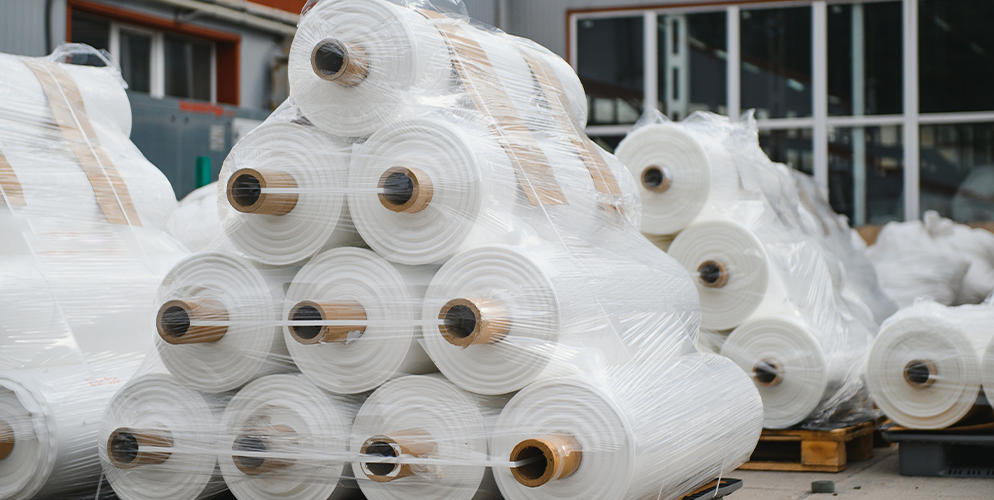
Plastic Film Annealing and Dimensional Stability
Film annealing is a controlled heat treatment process used in plastic film processing relieving internal stresses that can develop during extrusion or prior converting steps.
Annealed plastic film exhibits improved dimensional stability, reduced curling, and better flatness. These outcomes are especially important for applications such as printed graphics, electronics components, industrial laminates, and precision-cut parts that require tight tolerances or multi-step processing. Film annealing helps ensure consistent performance during slitting, sheeting, laminating, and downstream manufacturing applications.
Plastic Film Slitting for Width Control and Precision
Plastic Film slitting is a converting process that cuts rolls of plastic film into narrower rolls with precise width control. Slitting is typically performed using rotary blades or razor systems designed for clean cuts that avoid edge defects.
Film slitting maintains plastic film in roll form while creating precise, consistent widths. This makes slitting ideal for manufacturing workflows that rely on roll-fed equipment. Film slitting is commonly used in printing, coating, laminating, and packaging operations where uniform roll widths and clean edges are essential.
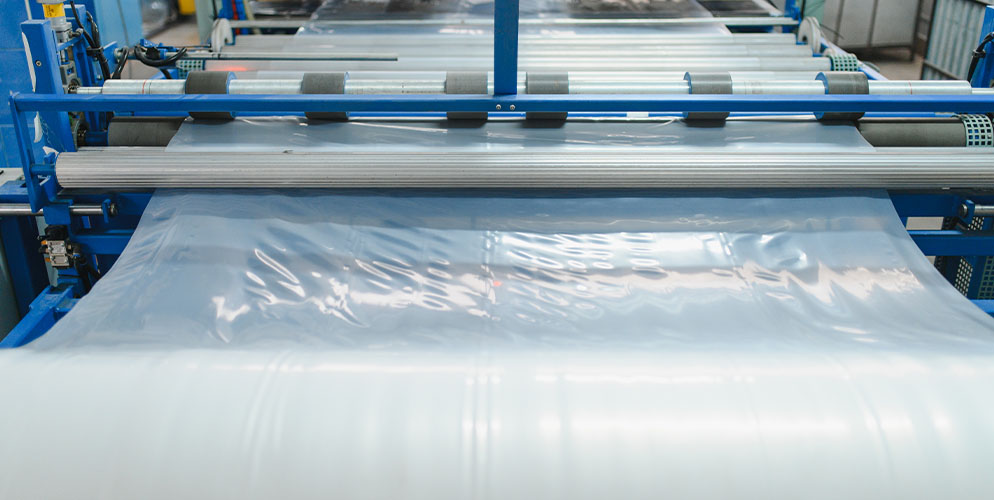
Plastic Film Sheeting for Consistent Flat Formats
Plastic Film sheeting converts plastic film from rolls into flat sheets of uniform size. This process ensures consistent length, alignment, and squareness, which are critical for automated handling and downstream processing.
Sheeted plastic film is often used in graphic printing, electronics, medical packaging, and industrial fabrication. Consistent sheeting improves stackability, reduces handling errors, and supports efficient production.
Plastic Film Laminating for Multi-Layer Structures
Plastic Film laminating bonds two or more plastic films together to create multi-layer structures with enhanced performance like strength, chemical resistance, barrier protection, or surface functionality.
Laminating plastic films allows manufacturers to tailor material performance without changing the base materials. These multi-layer structures are widely used in packaging, labeling, electronics, and specialty industrial applications.
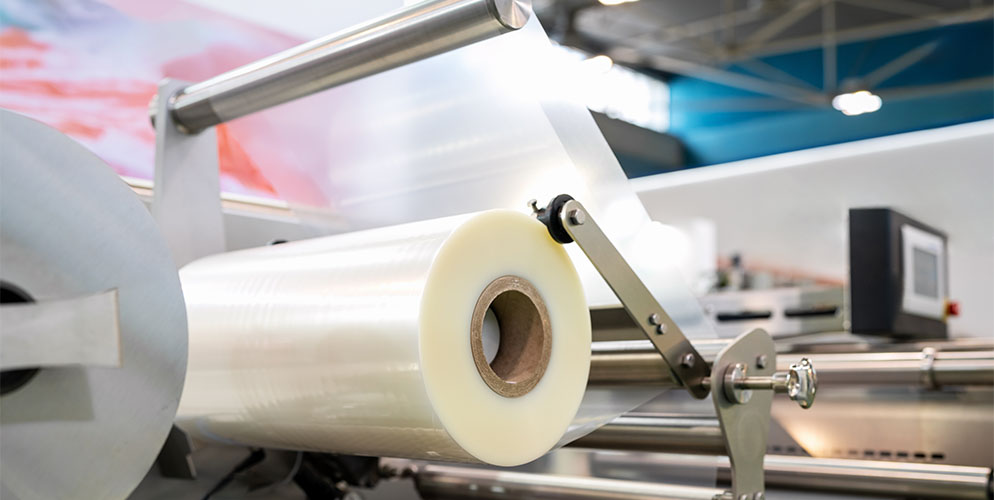
Plastic Film Guillotining for Straight-Edge Cutting
Plastic Film guillotining uses a straight-blade cutting system to produce clean, square edges on plastic film sheets or stacks. Unlike slitting, which cuts continuous rolls, guillotining is typically applied to stacked or sheeted materials.
This process is used when exact edge alignment, clean cuts, or short production runs are required. Film guillotining is often selected for precision trimming or custom-sized sheet formats.
Plastic Film Kitting and Packaging for Production Readiness
Plastic Film kitting involves grouping specific film sizes, quantities, or configurations into ready-to-use kits. Kitting simplifies inventory management and supports production-ready material delivery.
Packaging plays a key role in protecting converted plastic film during transport and storage. Proper plastic film packaging improves handling efficiency and ensures materials arrive production-ready. Film kitting is commonly used in assembly operations, cleanroom environments, and multi-component manufacturing workflows.
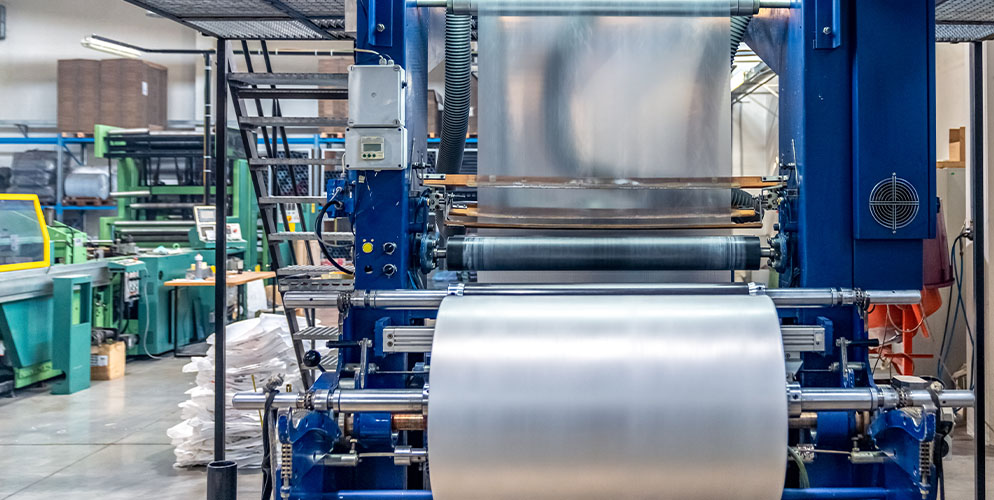
How Cutting and Converting Services Work Together
Cutting and converting services for plastic film are often combined into structured workflows to prepare raw film for manufacturing and production use. A typical plastic film cutting converting sequence includes film annealing to improve dimensional stability, slitting to control roll width, sheeting to create consistent flat formats, and packaging to deliver production-ready materials.
The order of these processes matters. Proper sequencing improves material performance, minimizes waste, and supports efficient downstream manufacturing.
Choose the Right Combination of Plastic Film Converting Processes
Plastic Film cutting and converting services are a comprehensive category of processes designed to prepare materials for real-world use. Selecting the right combination of annealing, slitting, sheeting, laminating, guillotining, kitting, and tooling ensures plastic film performs as intended.
PolymerFilms provides cutting and converting services for plastic film that help customers achieve accuracy, consistency, and production efficiency. Contact PolymerFilms to discuss the right film converting solution for your application.
Recent Posts
Help us spread the word by sharing with the community!